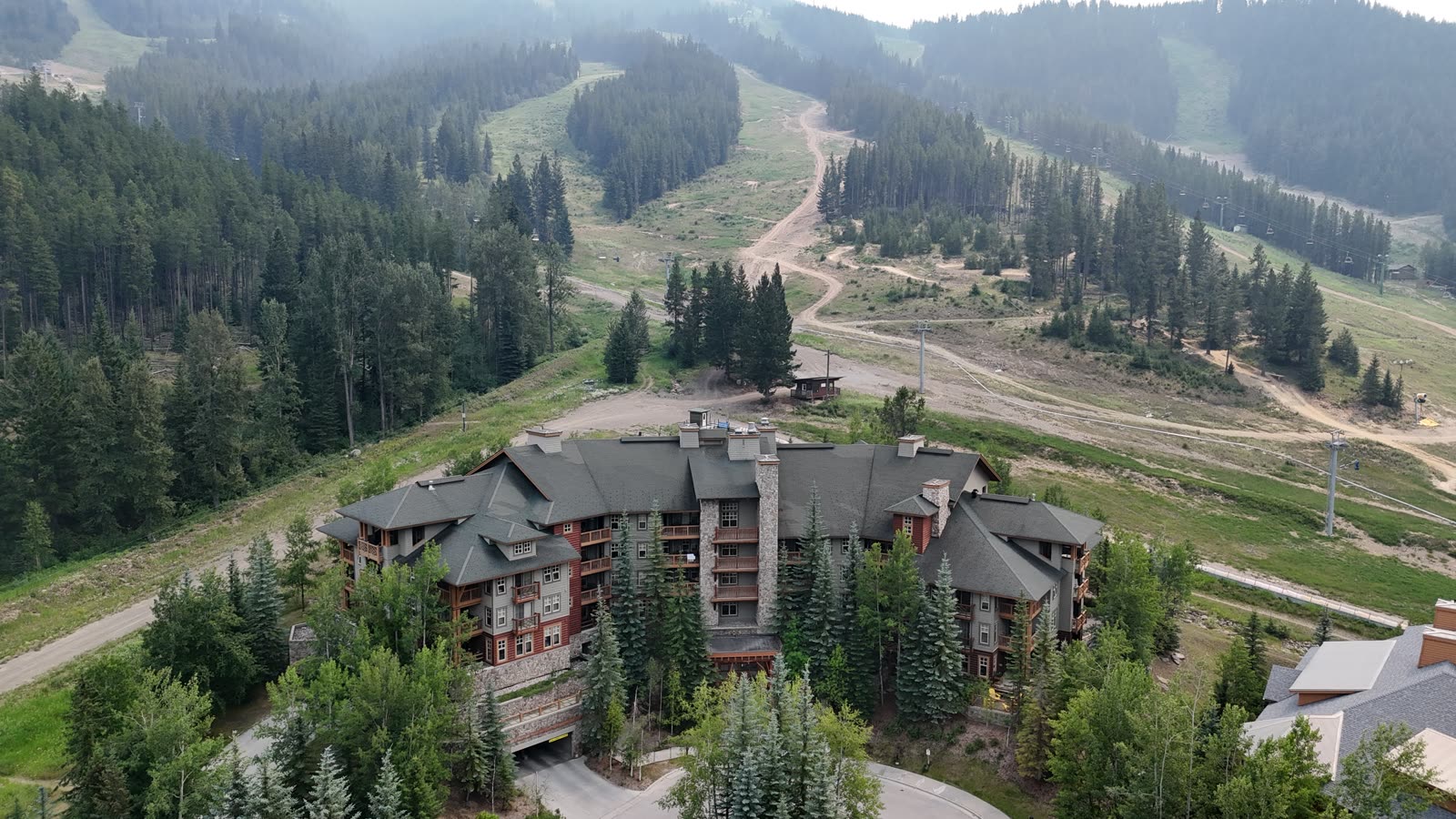
Resort-zoned condos and townhomes at Panorama Mountain Resort. Zoning, not price, sets the down payment here.
Every week, someone asks DK or RT a financing question we are not licensed to answer. How much down on a Panorama condo? Will a lender touch a lot with no services? Why did a Calgary bank say yes on the phone and no three days before closing? So we took the twenty-five questions we hear most often to Trevor Yerema, President of Advanced Mortgage, who has been financing property in the Kootenays and Calgary since 1998. These are his answers.
Financing a recreational property in the Columbia Valley is governed by the same federal rules as any Canadian mortgage — and then almost entirely rewritten by zoning. A personal-use second home in Invermere can go as low as 5% down. The same buyer at Panorama Mountain Resort will usually be asked for 35%. A vacant lot is typically 50%. Tourist-commercial zoning may not qualify as residential at all. There are more than forty distinct residential zones and sub-zones in this valley, each with its own lending consequences — which is why out-of-area lenders get caught out here so often.
The down payment cheat sheet
Start here. Find the row that matches what you are actually buying, not what it looks like from the listing photos. If you are between two rows, assume the higher number until a broker confirms otherwise.
| What you are buying | Typical minimum down | Watch for |
|---|---|---|
| Home or condo for personal use Invermere, Windermere, Radium, Fairmont town sites | 5% to $500K · 10% on $500K–$1.5M · 20% above $1.5M | Applies to second homes too, if you are not renting it out |
| Rental / income property | 20% and up | Rises with your overall debt picture |
| Resort-zoned condo or townhome Panorama Mountain Resort | 35% typical — 25% has been achieved | Rate premium; short lender list |
| Condo in a rental pool Panorama, Fairmont Hot Springs | 25% and up | The rental agreement itself gets reviewed |
| Tourist-commercial zoning | 35% at best | Often financed as commercial, not residential |
| Vacant lot or raw land | 50% typical — 35% in some cases | Serviced vs. unserviced; build timeline |
| Rural, no year-round maintained road | ~35% starting point | Cannot be your primary residence |
| Leasehold property | 25% and up | No insured financing; amortization capped by lease term |
| Out-of-province buyer, certain credit unions | Up to 50% | Lender-specific — shop it, do not take the first quote |
Down payment minimums are a starting point, not a promise. Every number above moves with the lender, the specific zoning designation on title, and your overall financial picture.
Down payments and cash to close
How much of a down payment do you need as a first-time home buyer?
The minimum is federal and identical across Canada: 5% on the first $500,000 of the purchase price, 10% on any portion between $500,000 and $1.5 million, and 20% at $1.5 million and above, where mortgage default insurance is no longer available. On a typical entry-level Columbia Valley condo at $425,000, that is $21,250 down. Budget closing costs on top of that, in cash. If the condo carries resort or tourist-commercial zoning, none of the above applies — see the zoning section below.
You already own a home in another province. How much do you need down on a second home in BC?
The first question is not how much — it is what you are buying. Ask yourself: is this a second home or a rental property? Will it be used by our family and friends, or will we supplement the carrying costs by renting it out?
- Second home. The same rules apply to second homes as they do to owner-occupied homes. The minimum down payment could be as low as 5%.
- Rental property. If you plan to rent the home to help supplement cost, keep it occupied for insurance purposes, or need the rental income to qualify, you fall under your lender's rental guidelines. Down payment starts at 20% and increases depending on your current overall financial picture.
- Out-of-province buyers. Some lenders — specific credit unions in particular — will reduce what they will lend to as low as 50% of the purchase price for out-of-province buyers. It is very important to shop around with a broker and not simply call one or two lenders for an estimate.
What is the difference between how lenders treat a second home and an investment property?
Use. A second home is for you, your family and your friends, and it is underwritten much like a primary residence — down payments as low as 5%, insured financing available. An investment property is one you are renting out, or one where you need the rental income to qualify. That moves you onto the lender's rental guidelines: 20% down minimum, tighter debt servicing, and usually a rate premium. Decide honestly which one you are buying before you write an offer, because changing the answer later can undo an approval.
How much of a down payment do you need for a vacant lot in the Columbia Valley?
Generally 50% down, but in certain circumstances some lenders will consider as little as 35%. What moves the number is whether the lot is serviced or unserviced, in-town or rural, and whether you are committing to a build timeline. Raw, unserviced rural land with no construction plan sits at the conservative end. A serviced in-town lot with a signed build contract gives a broker considerably more to work with. There is almost nothing useful published online about land lending in this specific market — get a real answer before you write.
Browse Columbia Valley lots and acreage →
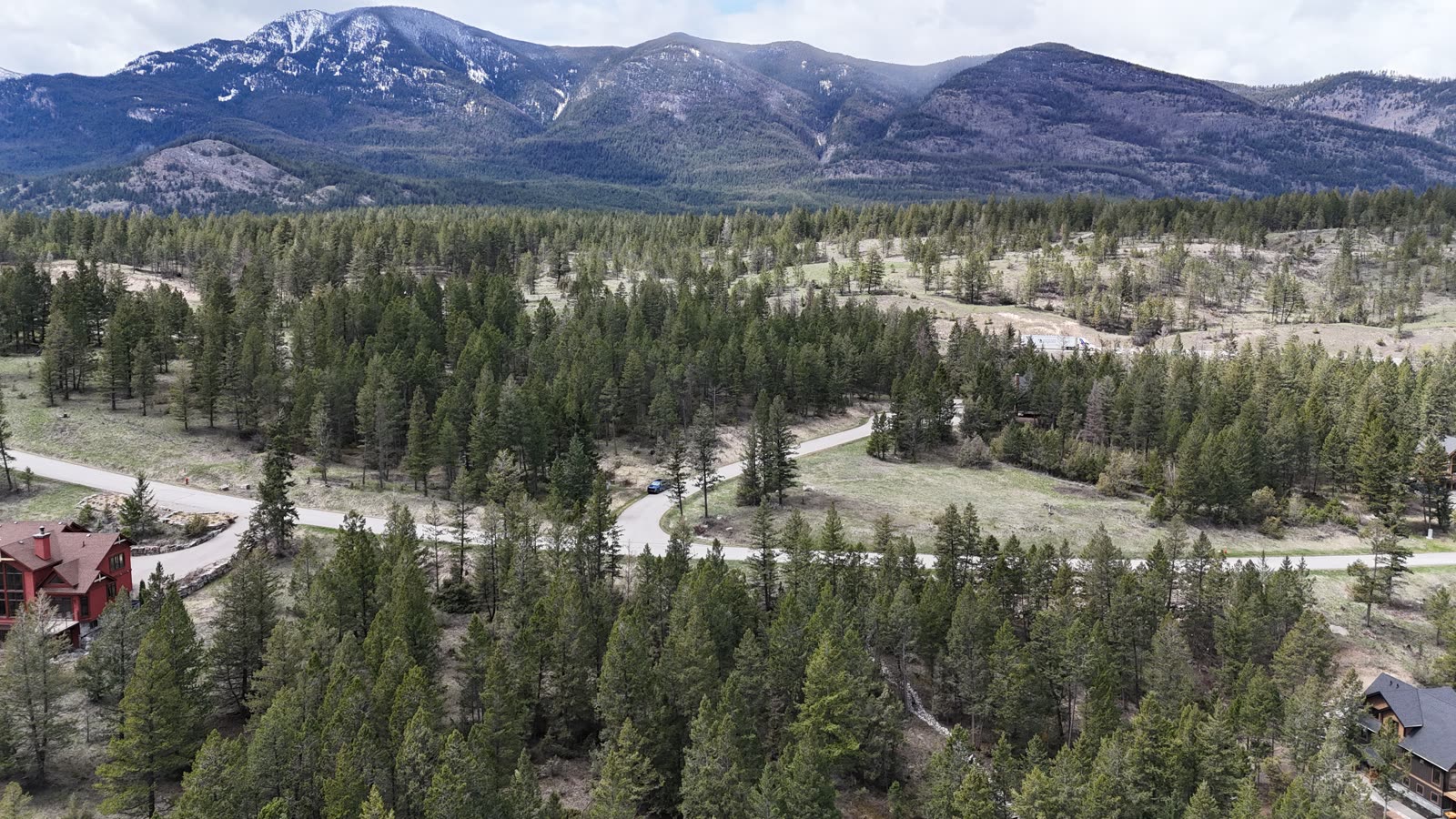
A vacant lot at Fairmont Hot Springs. Land generally needs 50% down, sometimes 35%.
What other fees come with buying a home in BC, and can they be rolled into the mortgage?
Mostly they cannot — you need this cash on top of the down payment. Budget for BC Property Transfer Tax, legal fees (Columbia Valley Law starting around $1,200, Rockies Law $1,370 and up), an appraisal at $400 and up, a home inspection, septic and well inspections on rural properties, title insurance, property tax and utility adjustments owed to the seller, home insurance, and moving costs. This is where otherwise-solid deals get stressful, because buyers plan the down payment carefully and then meet the closing costs three weeks out.
Are there GST or property transfer tax exemptions for a first-time buyer in BC?
If you are a permanent resident of the valley, yes. If you are a part-time resident, unfortunately not — BC's first-time buyer and newly built home exemptions require the property to be your principal residence, which rules out most recreational purchases. Confirm your own situation with your lawyer or notary at closing, since these exemptions turn on residency, citizenship and price thresholds that change. Current details are published by the Province of British Columbia at gov.bc.ca.
Resort zoning, rental pools and tourist-commercial
Why can't a mortgage broker or personal banker outside the Columbia Valley get an approval on a resort property at Panorama or Fairmont?
Because outside players do not understand the nuances of the valley. I cannot be more clear about this point. Your current lender's motivation is either to retain you as a customer, or they truly believe they know enough to transact in another region — but that is not what you need.
What you need is to work with both a real estate team and a mortgage company that understand the specific zoning jurisdictions in the valley. There are over forty distinct residential zones, sub-zones and specialized residential designations in the Columbia Valley. Each of those designations carries its own set of rules — down payment amounts, interest rate premiums, maximum amortization — that directly affect your path to purchasing.
The truth is that "shop local" is not simply a kitschy phrase. Working with someone who understands the above could save you your dream of owning in the Columbia Valley.
How much of a down payment do you need on a recreational condo or townhouse at Panorama Mountain Resort?
Almost every lender that will consider this type of zoning will request a 35% minimum down payment. That said, the Advanced Mortgage team has secured down payments as low as 25% on Panorama purchases. On a $500,000 townhome the gap between those two numbers is $50,000 of your own cash, which is precisely why it is worth having someone shop the file rather than accepting the first bank answer you are given.
Condos for sale at Panorama → · Panorama townhomes →
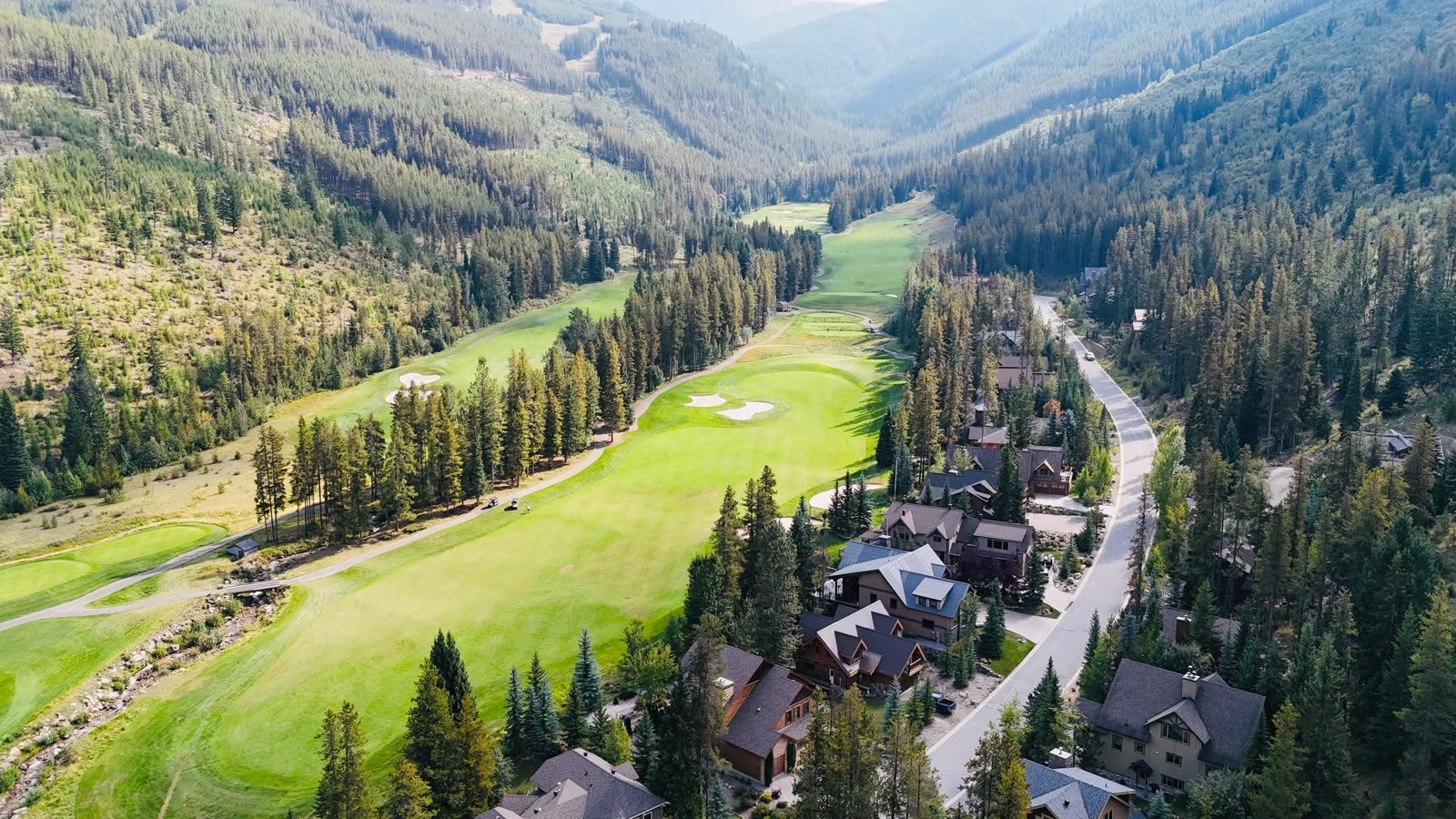
Homes above Greywolf at Panorama. Ask for the zoning designation on title before you write an offer.
Can you get a regular residential mortgage on a condo that is in a rental pool at Panorama or Fairmont Hot Springs?
Yes, it is possible — but the down payment will be 25% or higher. The rental pool agreement itself becomes part of what the lender reviews, so get a copy of it early rather than at the financing deadline. If you are weighing a rental-pool unit against a personal-use unit in the same complex, understand that you are comparing two quite different financing outcomes, not just two prices.
Fairmont Hot Springs condos for sale →
How does tourist-commercial zoning change financing on a Columbia Valley condo?
Tourist-commercial is a different zoning than resort, and it is the one that surprises people. At best you will require 35% down, but most likely this is exactly what it says it is — commercial, not residential. That means commercial lending terms, commercial amortizations, and a very different application. Before you write an offer on any condo in this valley, ask your REALTOR® for the actual zoning designation on title and send it to your broker. Do not assume it from the building.
If a strata restricts or bans short-term rentals, does that affect the mortgage?
It does, and in your favour. Lenders do not like short-term rentals. If a strata bans them, that is good news for the application. Buyers often read a short-term rental ban as lost income potential, and for some it genuinely is — but from a financing perspective it moves the property back toward standard residential treatment, which usually means more lenders willing to look at it and a better down payment position.
Rural, acreage and unusual properties
What do lenders require for a well and septic system on a rural property near Invermere, Windermere or in the RDEK?
For the well, we require the most recent well water certificate from a certified company, or we order a new one if the existing certificate is outdated. Septic is generally fine, but you should always inspect the system to confirm proper operation, and the solicitor may request additional items related to septic before closing. Neither of these is expensive relative to the purchase, and both are far cheaper than discovering the problem after possession.
Does a Columbia Valley property need year-round maintained road access to qualify for a mortgage?
No, but these types of rural properties will require a larger down payment. Without specific property details — the type of dwelling, whether it is a mobile or modular home, square footage, lot or land size — it is hard to estimate the requirement, but 35% down is a good starting point to budget to. One more condition matters: a property without year-round maintained road access cannot be your primary residence.
Rural Columbia Valley properties →
On an acreage near Invermere or Windermere, do lenders value the whole parcel or just the house and part of the land?
Most lenders will account for the main house plus up to 10 acres in the overall value. Some lenders will go up to 30 acres. A few will do the home plus one or two outbuildings and up to 10 acres. It is entirely lender dependent. The practical consequence: on a 40-acre parcel, the lender may be underwriting a value well below what you are paying, and you make up the difference in cash. Confirm the treatment before you remove your conditions.
Are log or timber-frame homes harder to finance, and does the appraisal work differently?
Yes, it is more work for the appraiser, so the appraisal cost may increase. But as long as the home is structurally sound, we have a good chance at financing it — down payment dependent, of course. There will be additional due diligence required by the lender, particularly where there are few comparable sales to support the value. It is possible; it just is not automatic, and it is not a file to hand to a lender who has never done one.
Can you finance a leasehold property in this area, and how does that change the amortization?
Yes, leased land is possible, but it is very specific. We require a copy of the head lease as well as all sub-leases for the lender to review, and approval is on a case-by-case basis. The maximum amortization will always be capped to end at least five years before the end of the lease. Down payment is affected too: we cannot do insured business on leasehold, so you are at 25% down or more. Expect a rate premium on leased land as well.
Does a recreational property need to be winterized or year-round habitable to get a standard mortgage?
This is more of an insurance question than a mortgage question. Seasonal homes are able to obtain mortgage financing from a select few lenders, but the lender list is small and seems to shrink every year. If you are looking at an older cabin around Windermere or the lake that was never built for winter, start the financing conversation before you write, not after — and start the insurance conversation at the same time.
Rates, structure and the stress test
How do you actually get the best mortgage rate?
It has never been easier to research interest rates. A good rule of thumb: search out the best rates for your term (3-year, 5-year) and product (variable or fixed) online, then compare that to the rate you are being offered. Do not be offended if the rate you are offered is not equal to or better than the one you found online — but it should be close.
Be aware that lenders add a rate premium for "special" properties such as resort-zoned homes, for insured versus conventional purchases (whether or not you pay the CMHC fee), for the location of the property (major urban centre, urban, acreage), and for amortization extensions such as moving from 25 years to 30. All of those affect the rate.
What matters more than the rate is the repayment terms. Can you make extra payments annually? Can you increase the payment at any time? Can you convert a variable term to a fixed term without cost? What does the penalty look like if you pay the mortgage out early? Those questions could save you far more than any interest rate discount ever could.
Do you have to pass the stress test on a second home?
Yes. You are required to pass the stress test for every home you purchase. It is a federal qualifying rule, not a lender preference, and buying a recreational property does not exempt you from it. Practically, that means the mortgage, property taxes, strata fees and heating on the home you already own all get counted against you when you qualify for the second one — which is why buyers are often approved for less than they expect.
Can you use a HELOC on your primary home for the down payment on a recreational property?
Yes, and it is worth looking at. Using a home equity line of credit on your primary residence is a great way to increase your down payment, centralize the majority of your debt on one single property, and create an emergency account for future issues, which minimizes risk. It also often moves you into a better down payment tier on a resort or rural property — the difference between 25% and 35% down at Panorama, for example.
Are interest rates higher on a second home than on a primary residence?
Not always. The rate premium on recreational purchases usually comes from something specific about the property or the structure rather than from the fact that it is a second home: resort or tourist-commercial zoning, leasehold title, conventional rather than insured financing, an extended amortization, or a rural location. A straightforward personal-use second home in Invermere may price very close to a primary residence. A resort-zoned unit will not.
Timing, documents and what actually goes wrong
How much longer does financing take on a rural or resort property than on an in-town Invermere townhouse?
Usually only a few days. If you set your financing condition at two to three weeks, that allows us enough time to get through all of the unique zoning issues. The delay is almost never the lender being slow — it is the extra confirmations a valley property needs: the zoning designation, a well certificate, an appraisal on a property with thin comparables. Build the time in at the offer stage and it is a non-event.
How long should a subject-to-financing period be for each property type?
Two to three weeks is preferred. With a formal pre-approval already in place, that timeline can be much shorter, which matters in a multiple-offer situation. Note the word formal: a rate hold from an online form is not a pre-approval. A formal pre-approval means your income, down payment and credit have already been reviewed and documented, so the only open question left on the file is the property itself.
What documents should someone gather before they start looking?
We provide a full list of documentation at the time of pre-approval, but the short list is:
- Income — recent paystub, T4s, T1 General
- Existing home or homes — mortgage statement, property tax bill, home insurance
- Down payment — a 90-day history of every account holding your down payment funds
The 90-day history is what catches people out. Start keeping statements the day you begin thinking about buying, not the day you write an offer.
What is the most common reason financing falls apart on a recreational purchase?
Down payment and zoning, 100%. To a lesser extent the home inspection — mainly foundation type. Both of the big two are entirely preventable. Zoning is knowable before you write an offer, and the down payment requirement follows from the zoning. The deals that collapse are almost always the ones where a buyer assumed a resort condo would be treated like a townhouse in town, and found out otherwise with a week left on the financing condition.

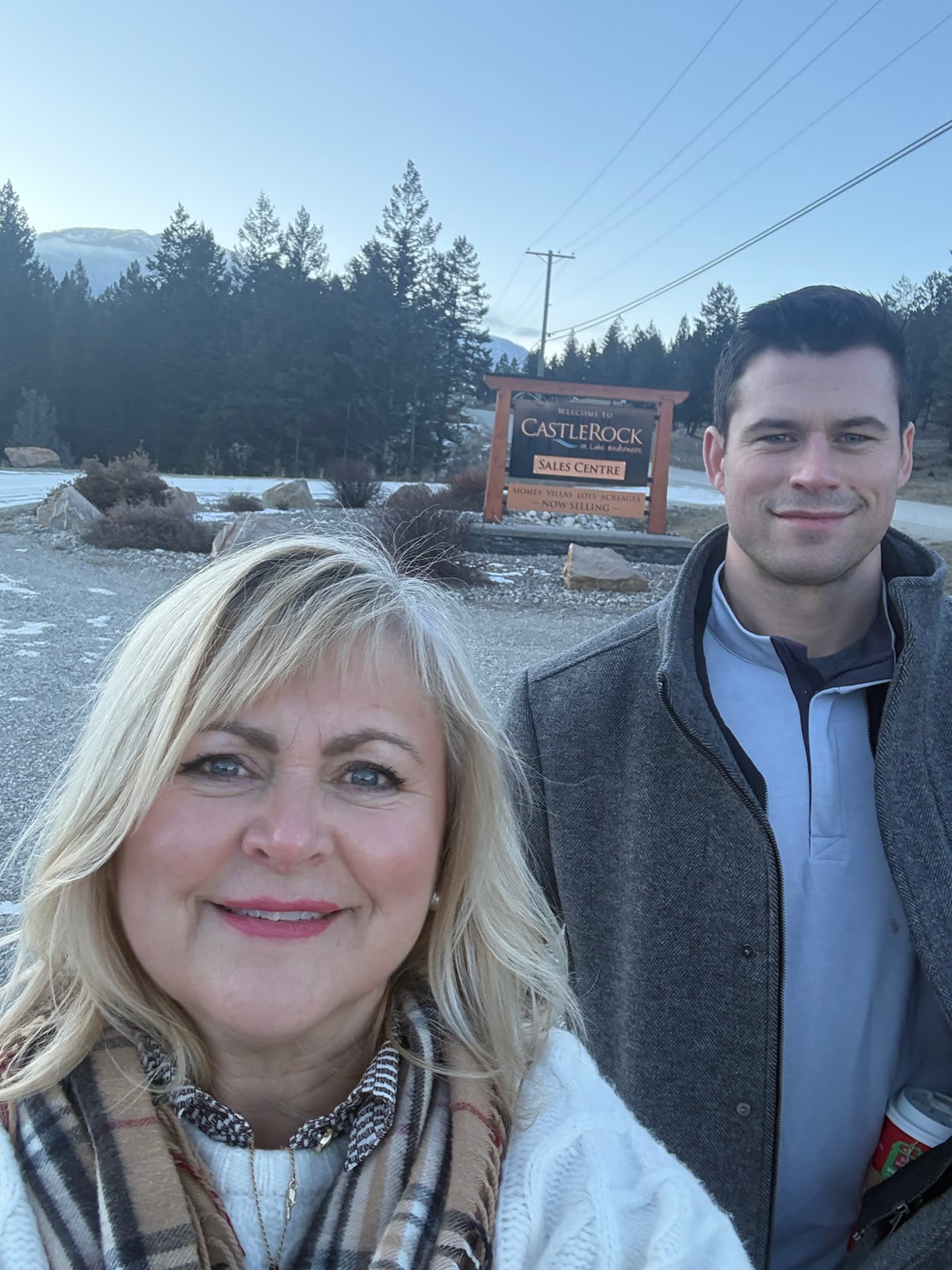
Know the zoning before you write the offer
Every expensive surprise on this page traces back to the same thing: nobody checked what the property was zoned until the financing condition was already running. DK and RT have been selling in the Columbia Valley long enough to tell you what a property is before you fall for it — and to point you at a broker who has financed that zoning before.
Talk to Team Rice · (250) 342-5935 · Read the Columbia Valley buying guide
Reviewed September 2026. Down payment minimums, qualifying rules and tax exemptions change. This page is general information for Columbia Valley buyers, not mortgage, tax or legal advice — confirm your own situation with a licensed mortgage broker, and confirm tax exemptions with your lawyer or notary. Interest rates are deliberately not quoted here because they date within weeks; ask for current pricing when you apply.